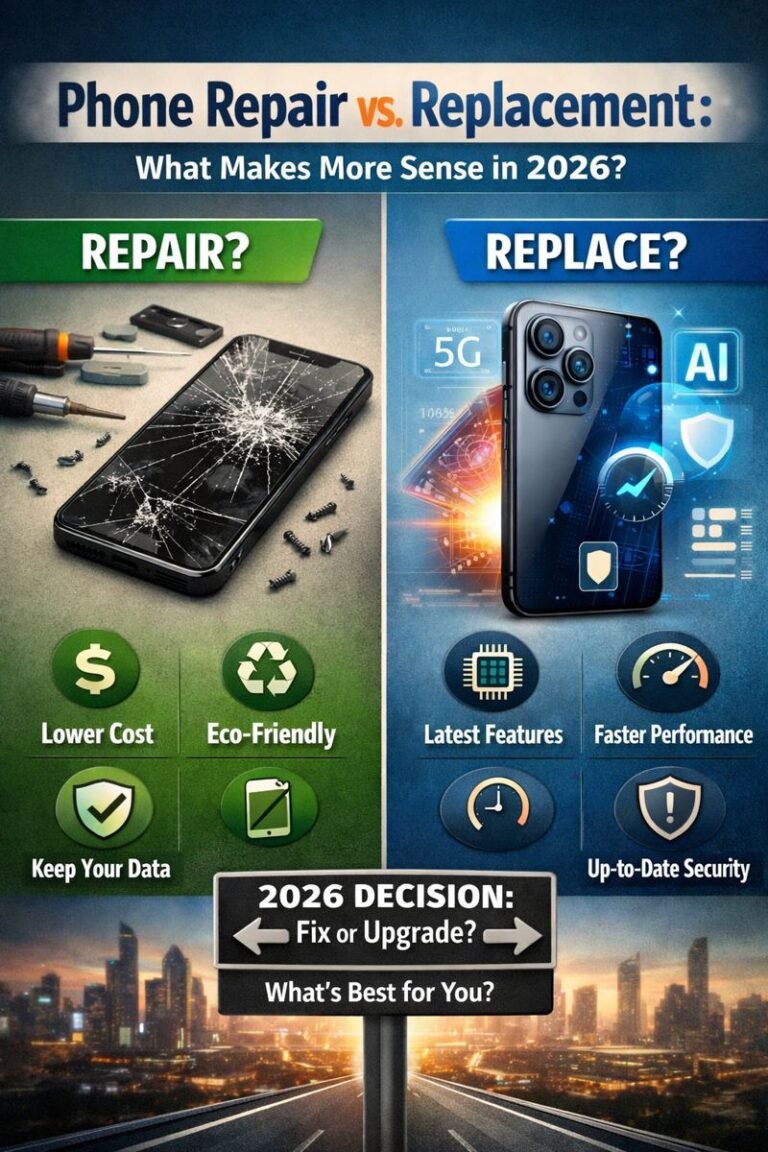
Smartphones have become essential tools for work, communication, entertainment, and daily life. As device prices continue to rise in 2026, consumers are increasingly faced with a common dilemma: should you repair your phone or replace it with a new one?
This decision is no longer just about cost. Factors like sustainability, software longevity, repairability, resale value, and performance upgrades now play a critical role. In this guide, we break down phone repair vs. replacement in detail to help you make the smartest decision in 2026.
Understanding the Smartphone Landscape in 2026
The smartphone industry in 2026 looks very different from just a few years ago:
Flagship phones now cost significantly more than mid-range models
Manufacturers are extending software support (5–7 years)
Right-to-repair laws are expanding globally
Consumers are more eco-conscious than ever
Because of these shifts, repairing a phone is often more viable in 2026 than it was before, especially for common issues like cracked screens, battery degradation, or charging port failures.
When Phone Repair Makes More Sense
1. Cost-Effectiveness of Repairs
In most cases, repairing a phone costs significantly less than replacing it. Common repairs include:
Screen replacement
Battery replacement
Charging port repair
Speaker or microphone repair
For example, replacing a worn-out battery can restore a phone’s performance for a fraction of the price of a new device. In 2026, improved aftermarket parts and repair tools have made repairs more reliable and affordable.
If the repair cost is under 40–50% of the phone’s current market value, repair is usually the smarter choice.
2. Extended Software Support
Major manufacturers now provide longer software and security updates. Many devices released in the last 3–4 years still receive:
Operating system updates
Security patches
Performance optimizations
If your phone is still supported, repairing it can easily extend its usable life by another 1–2 years without sacrificing security or functionality.
3. Environmental Impact
Replacing a phone contributes to electronic waste, which remains a growing global issue. Manufacturing new smartphones consumes:
Rare earth metals
Significant energy and water resources
High carbon emissions
Repairing your phone reduces environmental impact and aligns with sustainable technology practices. In 2026, many consumers actively choose repair as an eco-friendly alternative.
4. Data Convenience and Familiarity
Keeping your existing phone means:
No data migration headaches
No need to relearn a new interface
No compatibility issues with accessories
For many users, the convenience of repair outweighs the appeal of upgrading.
When Phone Replacement Is the Better Option
1. Severe or Multiple Hardware Failures
If your phone has multiple major issues—such as motherboard failure combined with screen damage—the total repair cost can quickly approach or exceed the price of a replacement device.
In such cases, replacement often provides better long-term value.
2. Obsolete Performance and Hardware Limitations
Even with repairs, older phones may struggle to meet modern demands in 2026, including:
Advanced AI-powered apps
High-resolution gaming
Enhanced camera processing
Faster network standards
If your phone consistently lags, overheats, or fails to support newer apps, replacement may offer a noticeable quality-of-life improvement.
3. End of Software and Security Updates
Once a phone no longer receives security updates, it becomes vulnerable to:
Malware and data breaches
App incompatibility
Performance instability
If your device is officially unsupported, replacement is often the safer and smarter decision—especially for business or financial use.
4. Major Technology Upgrades
Newer phones in 2026 often include:
Improved battery efficiency
Better cameras and AI photography
Faster processors
Advanced biometric security
Improved durability
If these features significantly impact your daily use, replacement may justify the investment.
Repair vs. Replacement: Cost Comparison in 2026
Factor
Repair
Replacement
Upfront cost
Low to moderate
High
Environmental impact
Minimal
Significant
Performance boost
Limited
High
Software lifespan
Depends on model
Full lifecycle
Convenience
High
Medium
Resale value
Moderate
Higher initially
How Right-to-Repair Laws Are Changing the Game
In 2026, expanded right-to-repair regulations mean:
Easier access to original or certified parts
More independent repair shops
Transparent repair pricing
Longer device longevity
This has made phone repair safer, more reliable, and more mainstream than ever before.
Key Questions to Ask Before Deciding
Before choosing between phone repair and replacement, ask yourself:
Is the phone still receiving security updates?
Does it meet my daily performance needs?
Is the repair cost less than half the value of the phone?
Do I care about sustainability and reducing e-waste?
Are new features truly necessary for my use?
Answering these questions will clarify the right path.
Expert Recommendation for 2026
Repair your phone if:
The issue is limited (screen, battery, port)
Software support is still active
Repair costs are reasonable
You want a sustainable option
Replace your phone if:
Multiple major components are failing
The device is obsolete or unsupported
Performance limits affect productivity
You need modern features for work or lifestyle
Final Verdict: What Makes More Sense in 2026?
In 2026, phone repair often makes more sense than replacement for most users. Rising device costs, improved repair options, longer software support, and environmental awareness have shifted the balance in favor of repair.
However, replacement remains the better option when performance, security, or hardware limitations outweigh repair benefits.
The smartest choice depends on cost, condition, usage needs, and long-term value—not just the age of the phone.
Ready to Decide?
If you’re unsure whether to repair or replace your phone, a professional diagnostic can provide clarity and help you choose the most cost-effective solution.
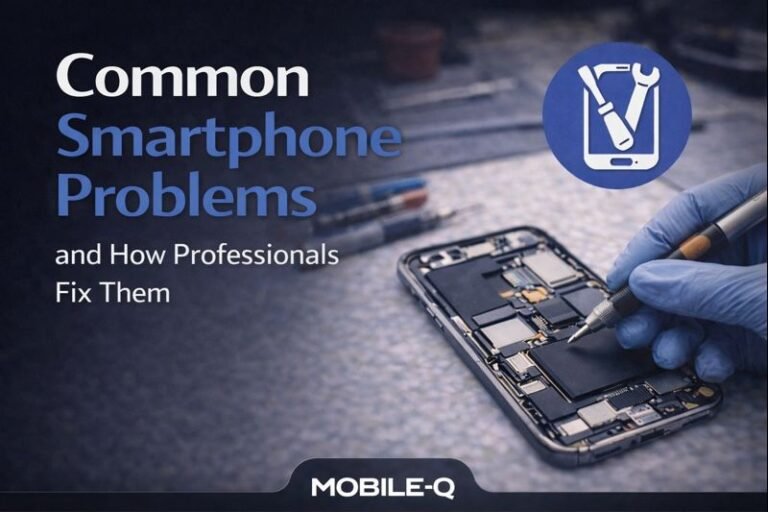
Smartphones are an essential part of everyday life, but even the best devices can develop issues over time. From cracked screens to battery problems, these faults can disrupt productivity and communication. While some minor issues can be managed at home, most require professional repair to avoid further damage.
In this guide, we cover the most common smartphone problems and explain how professional technicians fix them, helping you decide when it’s time to visit a trusted repair expert like Mobile-Q.
1. Fast Battery Drain or Battery Failure
Battery performance naturally declines with use. You may notice your phone draining quickly, shutting down unexpectedly, or overheating during charging.
How professionals fix it: Technicians perform battery health diagnostics to confirm degradation. If required, they replace the battery with a high-quality, compatible unit to restore reliable performance and charging efficiency.
2. Cracked or Broken Screen
A cracked screen is one of the most common smartphone issues. Beyond appearance, damaged screens can affect touch responsiveness and display clarity.
How professionals fix it: Professionals replace the damaged screen assembly using precision tools and tested replacement parts, ensuring full touch sensitivity and display quality are restored.
3. Unresponsive or Glitchy Touchscreen
When your screen stops responding properly, the issue could be software-related or caused by internal hardware damage.
How professionals fix it: Technicians first rule out software errors through testing and updates. If the problem is hardware-related, the digitizer or screen assembly is replaced to ensure smooth operation.
4. Overheating Issues
Smartphones can overheat due to heavy usage, background apps, battery faults, or internal component damage.
How professionals fix it: Repair specialists run thermal diagnostics to identify the cause. Solutions may include software optimization, battery replacement, or repair of internal components causing excessive heat.
5. Charging Port Problems
If your phone won’t charge properly or only works at certain angles, the charging port may be damaged or blocked with debris.
How professionals fix it: Technicians safely clean the charging port and test power flow. If the port is damaged, it is replaced to restore consistent and safe charging.
Dropped calls, weak signals, or Bluetooth failures can be frustrating and disruptive.
How professionals fix it: Experts reset network settings, update firmware, and test internal antennas or network modules. Faulty components are repaired or replaced as needed.
7. Camera Not Working or Blurry Photos
Camera issues often result from lens damage, internal module faults, or software glitches.
How professionals fix it: Technicians inspect and clean the lens, recalibrate the camera software, or replace the camera module to restore clear image quality.
8. Speaker or Microphone Problems
Low sound, distorted audio, or microphone failure can affect calls and media playback.
How professionals fix it: Repair experts clean speaker grills, test audio circuits, and replace faulty speakers or microphones when necessary.
9. Software Freezing or App Crashes
Slow performance, freezing screens, or frequent app crashes are usually linked to outdated software or corrupted data.
How professionals fix it: Professionals perform system updates, optimize storage, and resolve software conflicts without risking data loss.
10. Water or Liquid Damage
Liquid exposure can cause corrosion and internal short circuits if not treated quickly.
How professionals fix it: Technicians carefully disassemble the device, dry internal components, clean corrosion, and replace damaged parts to prevent long-term failure.
Why Choose Professional Smartphone Repair?
Attempting DIY fixes can often cause more harm than good. Professional repair services offer:
Accurate diagnostics
High-quality replacement parts
Data-safe repair processes
Long-term device reliability
At Mobile-Q, trained technicians ensure your device is repaired efficiently and safely.
Frequently Asked Questions (FAQs)
Can a phone with water damage be repaired?
Yes, if treated quickly by professionals. Early cleaning and component repair significantly improve recovery chances.
Is it cheaper to repair a phone or buy a new one?
In most cases, professional repair is far more cost-effective than replacing the entire device.
How long does a typical smartphone repair take?
Most common repairs, such as screen or battery replacement, can be completed the same day.
Will my data be safe during repair?
Yes. Professional technicians follow strict procedures to protect your data during repairs.
When should I visit a repair expert?
If your phone has hardware damage, charging issues, overheating, or persistent software problems, professional repair is strongly recommended.
Final Thoughts
Smartphone issues are common, but they don’t always mean you need a new device. With professional diagnosis and repair, most problems can be fixed quickly and affordably.
If your phone isn’t performing as it should, Mobile-Q is here to help with expert smartphone repair services you can trust.
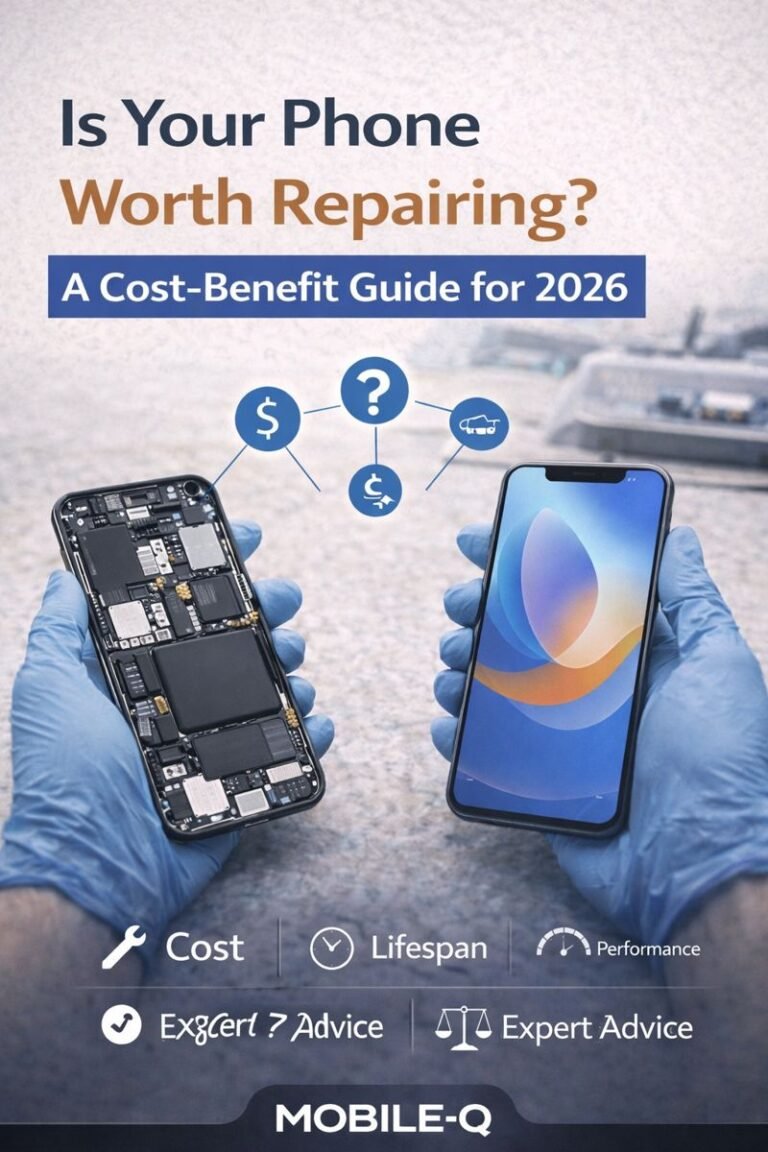
Smartphones have become essential to everyday life, handling everything from communication and payments to work and entertainment. As devices become more powerful—and more expensive—the decision between phone repair and replacement is no longer straightforward. In 2026, understanding whether your phone is worth repairing requires a careful cost-benefit analysis that considers performance, lifespan, environmental impact, and real-world usage.
This guide helps you make an informed decision by breaking down the true costs and long-term value of cell phone repair versus replacement.
In 2026, smartphone prices, sustainability concerns, and repair technology have all evolved.
Flagship phones now cost significantly more than basic repairs
Professional repairs are faster and more reliable
Environmental awareness favors extending device life
Many issues are fixable without full replacement
Repairing instead of replacing can save money, reduce e-waste, and extend usability—if done at the right time.
Common Phone Problems That Are Usually Worth Repairing
Screen Damage
Cracked or shattered screens look severe but are often one of the most cost-effective repairs. If the phone still functions properly, replacing the screen can restore it to near-new condition.
Battery Issues
If your phone drains quickly or shuts down unexpectedly, battery replacement is almost always worth it—especially if the phone is less than four years old.
Charging Port Problems
Loose connections or charging failures are typically repairable without replacing the entire device.
Camera or Speaker Malfunctions
These issues impact usability but not core functionality, making them ideal repair candidates.
When Repairing Your Phone Makes Financial Sense
The 50% Rule
A widely used guideline: If the repair cost is less than 50% of the phone’s replacement value, repairing is usually the smarter option.
Your Phone Is Less Than 3–4 Years Old
Modern smartphones are designed to last longer. If your device still receives software updates, repairing it often extends its life significantly.
Performance Is Still Acceptable
If apps run smoothly and storage is manageable, repairing hardware issues can give you another 1–2 years of use.
When It’s Better to Replace Your Phone
Multiple Major Issues
If your phone has a cracked screen, failing battery, and motherboard damage, replacement may be more economical.
No Longer Supported by Software Updates
Phones without security updates pose risks and may not support essential apps in 2026.
Repair Cost Exceeds Phone Value
When repair costs approach or exceed the resale or replacement value, upgrading becomes the logical choice.
Cost Comparison – Repair vs Replacement in 2026
Factor
Repair
Replacement
Cost
Lower upfront
High upfront
Time
Same day to 48 hours
Immediate but costly
Data Transfer
No setup needed
Time-consuming
Environmental Impact
Eco-friendly
Higher e-waste
Learning Curve
None
Adjusting to new device
Environmental and Sustainability Considerations
Repairing your phone reduces electronic waste and lowers carbon emissions associated with manufacturing new devices. In 2026, sustainability is a growing factor influencing repair decisions, especially among environmentally conscious consumers.
Professional Repair vs DIY – What’s Better in 2026?
While DIY repairs seem cheaper, modern smartphones are more complex than ever.
Professional repair advantages:
Warranty on parts and labor
Proper diagnostics
No risk of further damage
Faster turnaround
DIY repairs often lead to higher long-term costs if mistakes occur.
Questions to Ask Before Repairing Your Phone
How old is my device?
Is the repair under 50% of replacement cost?
Does my phone still receive updates?
Is the issue isolated or recurring?
Will repair significantly improve performance?
If most answers are positive, repair is usually worth it.
Final Verdict – Is Your Phone Worth Repairing in 2026?
For most users, yes. If your phone is under four years old and the issue is limited to common components like the screen, battery, or charging port, repair is the smarter and more economical choice in 2026.
Replacement should be reserved for outdated devices, unsupported models, or phones with extensive internal damage.
The transfer of data from tablet to phone has become a common need as users upgrade devices, switch platforms, or simply want access to the same files across multiple devices. Whether you’re moving photos, videos, contacts, documents, or apps, transferring data efficiently ensures nothing important is lost. Read more
Using mobile devices in extreme climates is becoming a growing challenge for tech users around the world. In hot regions, the use of phone and tablets requires extra care due to the risks of overheating, battery damage, screen malfunction, and potential performance issues. Read more
Smartphones and tablets have become essential tools in daily life, supporting communication, work, entertainment, and productivity. However, frequent usage, accidental damage, and environmental factors often lead to performance issues and hardware failures. Read more